Ingrown Toenail (IGTN) Surgery
We offer professional and individualised surgical options to ensure the highest care is taken with your feet.
If you are struggling with persistent and recurring IGTN issues, opting for ingrown toenail surgery is likely the optimal choice. If you have tried conservative treatments with failed long-term results, surgery to remove the nail edge, surgery presents a more permanent solution to avoid ongoing discomfort and pain.
If your IGTN problem is neither chronic nor recurring, or if you simply don’t like the idea of surgery explore our IGTN conservative treatment page to understand other yet effective options.

What to expect?
Ahead of your surgery, our podiatrist will discuss various surgical options available and tailor a plan specifically for your ingrown toenail removal.
The most common procedure is Partial Nail Avulsion (PNA), which involves the permanent removal of the side of the toenail while preserving its natural appearance. The other option is Total Nail Avulsion (TNA) which is rarely required however may be necessary and involves the complete removal of the nail to prevent future complications.
Rest assured, we'll guide you through the process with care and expertise.
-
Only part of the nail that’s causing the persistent problems is removed.
Your nail will appear normal after healing
Procedure completed in 60 minutes
98 percent chance nail won’t grow back and cause an ingrown
Provides a permanent solution to the problem
Short recovery time
-
Full Nail removal
A simple and speedy procedure, usually just 60 minutes long
Ensures a lasting fix for your nail, with no regrowth
Boasts an impressive 98 percent success rate
Quick recovery time
98% Success rate
98% Success rate

How come the nail dosnt’t grow back in PNA ?
We use, a mild acid called Phenol, which works on the nail matrix to prevent nail regrowth. Most patients prefer a PNA due to its success rate without removing the full nail, maintaining the nail appearance. and integrity.
TGA approved, phenol has been proven to be safe and effective, even for those that are diabetic or have vascular concerns.
We avoid use only in pregnant or breastfeeding patients as the data is limited.
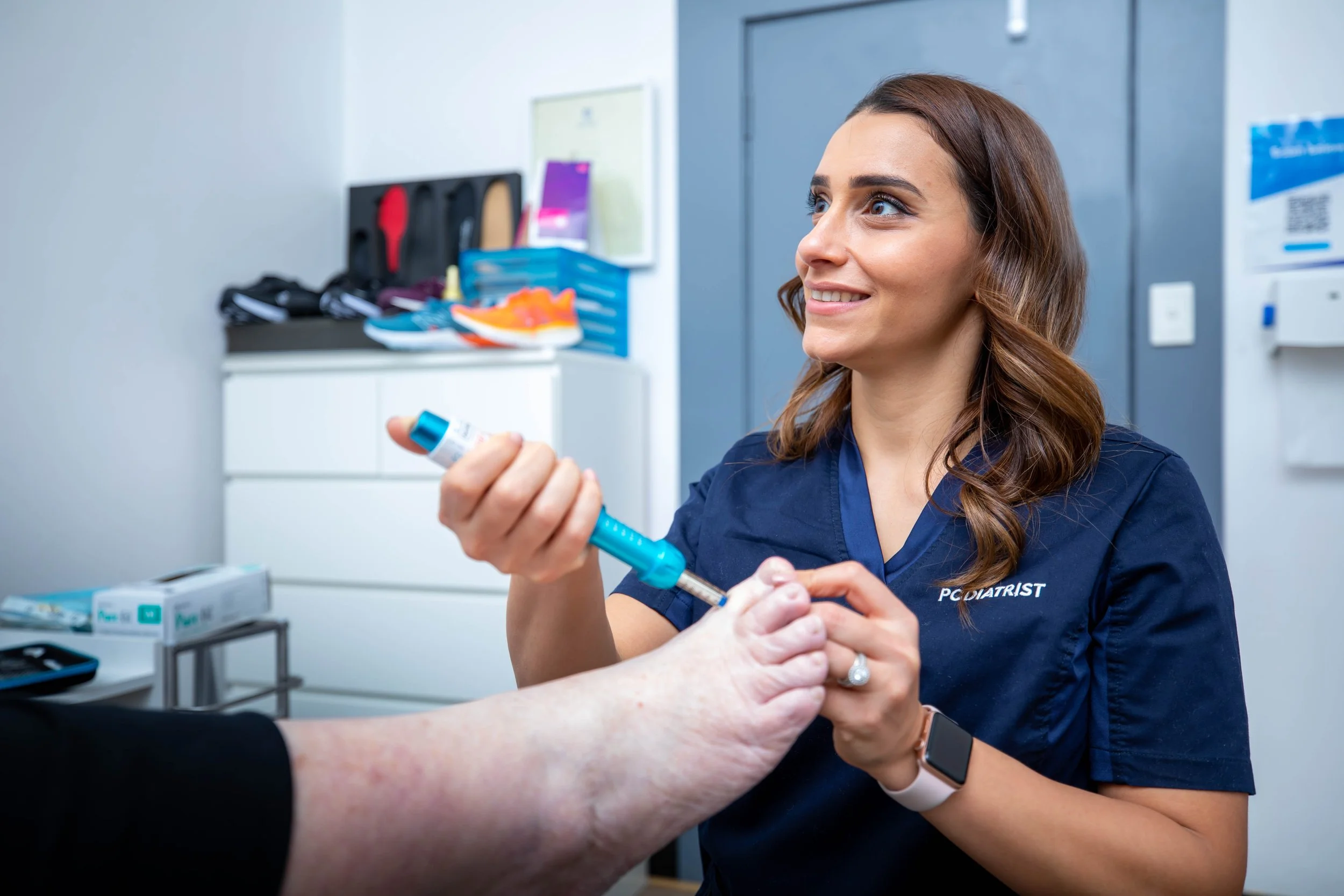
1st in Adelaide to provide a needle free local anaesthetic
Ensuring your comfort throughout ingrown toenail surgery is our top priority.
We're privileged to have Mera as the pioneer in South Australia and the one who educates colleagues on using the needle-free device.
The device is a spring-operated, needle-free injection system utilising high pressure. It employs a narrow jet of injected liquid to penetrate the skin, delivering needle-free local anesthesia to the toe for ingrown toenail treatment.
This option is provided complimentary to all our patients to ensure the procedure is as pain-free as possible..

Getting ready for your upcoming surgery? Here's what you need to do.
Arrange transportation: Make sure you have someone to drop you off as you won’t be able to drive back home on your own.
Schedule time off: Plan to take at least 48 hours off work so you can limit weight-bearing activities.
Choose footwear: Opt for open-toe shoes for the week following the procedure. If your job requires safety footwear, you can switch back after 48 hours.
Fuel up: Don't forget to have a meal before your surgery appointment although it is a short minor surgery.
Pack post-op shoes: Remember to bring along open-toe shoes for after the procedure.
Share medical info: Let us know about any known allergies and medications during your assessment.
Ask questions. There are no silly questions.
Prior to surgery.


Post surgery.
To ensure proper recovery after nail removal surgery, we will provide you with a box of goodies to keep your toe clean and make you feel good.
Things to consider;
Arrange transport home as you shouldn't drive with the local anesthesia.
Keep the dressing on, add another if needed, elevate your foot, and maintain hygiene until your next appointment.
Wear open-toe shoes and you can use paracetamol if needed for pain.
Contact us if you experience severe pain prior to follow up appointment.
Avoid tight shoes, weight-bearing, and strenuous activities for one week post-surgery.
Post-Op contact support provided outside of working hours with our podiatrist.
Is the follow up necessary even if I feel well?
Monitoring this phase is essential to oversee healing and recovery. Our goal is not merely to complete the task but to deliver optimal outcomes; this is our commitment. To guarantee this, we must ensure prompt and appropriate healing.

When is surgery not a good idea?
You are pregnant or breastfeeding.
You have poor blood circulation in your feet.
You are allergic to the anaesthetic used.
Your toenail is very infected.
What side-effects may I experience?
Mild pain commonly relieved with paracetamol
Post-operative infections which are rare but can appear with in first few days. This is one of the reasons why follow up is important.
Why would a podiatrist be the best person to treat my IGTN ?

-
A podiatrist is often considered more adept at ingrown toenail surgery than other practitioners due to their specialised training and focus on foot and ankle health. Here are several reasons why:
Formal Training: Podiatrists undergo extensive training specifically focused on foot and ankle conditions, including ingrown toenails. They complete studies whiph provide in-depth knowledge of foot anatomy, biomechanics, and conditions affecting the feet.
Experience and Expertise: Podiatrists perform ingrown toenail surgeries daily. Their experience and expertise in diagnosing and treating various foot conditions, including complex cases of ingrown toenails, enable them to provide specialised care tailored to individual needs.
Advanced Techniques and Equipment: Podiatrists are equipped with specialised tools and techniques for ingrown toenail surgery. They have access to surgical instruments and equipment specifically designed for foot procedures, allowing for precise and effective treatment while minimising discomfort and complications.
Preventative Care: Podiatrists not only treat ingrown toenails but also provide preventive care and education to help patients avoid recurrence. They may offer advice on proper nail trimming techniques, footwear selection, and foot hygiene practices to minimise the risk of future ingrown toenails.
Comprehensive Foot Care: Podiatrists take a holistic approach to foot health, addressing underlying factors contributing to ingrown toenails such as structural abnormalities, gait issues, or repetitive trauma. They can evaluate the overall health of the feet and recommend personalized treatment plans to optimize foot function and prevent future problems.
While GPs may also perform simple procedures for ingrown toenails, they may refer patients to a podiatrist for more complex cases or when specialised expertise is required.
Ultimately, choosing a podiatrist for ingrown toenail surgery can provide patients with access to specialised care and better outcomes for their foot health.

Mera Joseph
(BACHELOR OF PODIATRIC MEDICINE UNISA)
Founder and Principal Podiatrist
Mera’s passion for ingrown toenail treatment and surgery has been a guiding light in her career journey. With extensive experience and expertise in clinical practice, she takes joy in mentoring and guiding aspiring podiatrists at the University of South Australia. Having recently completed her Basic Surgical Skills Education & Training Course (BSSET) from the Australian College of Podiatric Surgeons, she remains committed to staying on top of the latest clinical procedures. Mera’s unwavering dedication to ensuring patients have positive experiences and achieve optimal outcomes reflects her deep-rooted passion for podiatry.